Transforming Vintage Vibes into Modern Masterpieces.
In the vibrant world of contemporary art, few artists have managed to capture the energy and nostalgia of pop culture quite like Julia Brevetti. With her unique blend of realism and pop art, Julia has carved out a distinctive space in the Canadian art scene. Known for her stunning acrylic paintings, particularly her vintage car series, she brings an unmistakable style to the canvas, blending bold colours and minimalist backgrounds that evoke both emotion and nostalgia.
Julia’s artistic journey began in a more unconventional way, sparked by her childhood fascination with Marvel characters and a love for visual arts. What started as a hobby soon transformed into a full-time career, driven by her desire for freedom and flexibility in her work. As she traveled and explored new places, Julia found herself increasingly drawn to the cultural significance of vintage cars, an interest that now defines much of her artistic output.
In this exclusive interview with CiiN Magazine, Julia opens up about her creative process, the challenges of balancing personal expression with client commissions, and the profound impact social media has had on her career. From experimenting with new techniques to reflecting on the meaning behind her work, Julia shares the insights and inspirations that fuel her artistic journey. Whether you’re an art enthusiast or simply curious about the life of a full-time artist, this conversation with Julia Brevetti offers an inspiring glimpse into the world of an artist who continues to push boundaries and inspire others.
Can you share your journey into the art world and what inspired you to become an artist?
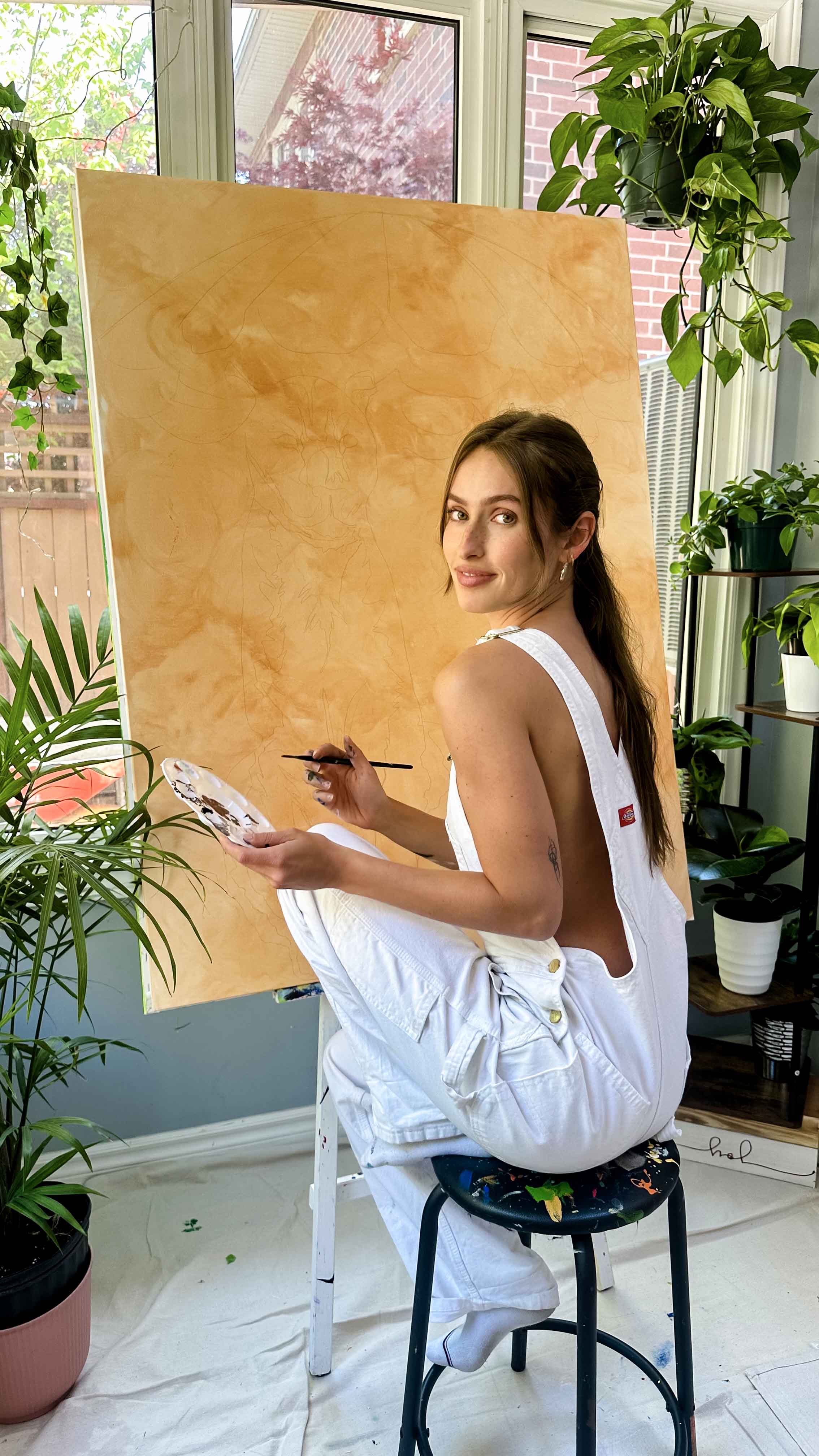
I was never particularly strong in subjects like math and science in school — I was always more drawn to the arts, like drama and visual arts. When I was bored, I’d paint Marvel characters like Spider-Man and started posting them on Instagram. A few people reached out to buy them here and there, so it remained a side hobby for a while. As I started traveling more, I realized I needed a career that offered me freedom and flexibility. That’s when I decided to dedicate more time and energy into becoming a full-time artist.
How did your Bachelor of Arts from TMU influence your artistic development?
Honestly, it didn’t directly influence my path as an artist. I went to university because it was what everyone around me was doing — it felt like the expected next step after high school. While I enjoyed learning, I wasn’t particularly passionate about any one subject, and I didn’t feel creatively driven by my studies.
What led you to specialize in acrylic on canvas, and how does this medium suit your creative expression?
I chose acrylic because it’s relatively straightforward to work with. Unlike oil paint, it dries quickly and is less complex to handle. I do want to explore other mediums, including oil, but for now, acrylic suits my style and process best.
Your vintage car collection merges realism with pop art. What drew you to this unique fusion?
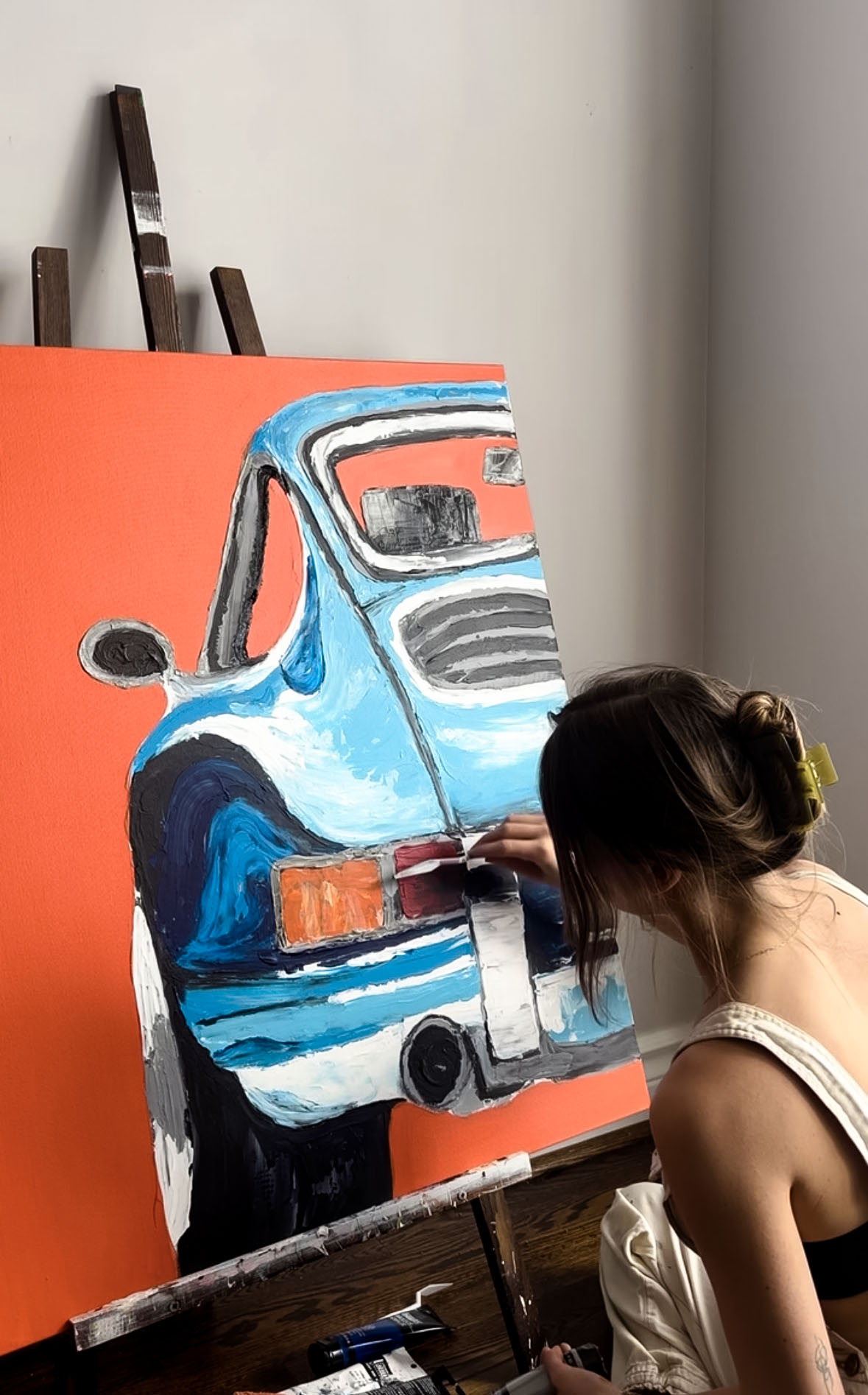
I’ve always been drawn to vintage cars. Spending time in California, where the classic car culture is strong, definitely fueled that interest. I was never great at painting scenery, so when I first tried painting a vintage Bentley I saw while traveling, I wasn’t sure what to do with the background. I picked a random color, added a shadow, and that minimalist pop-art background ended up becoming a signature look for my car series.
How do you decide on the subjects and themes for your paintings?
I mostly go with what inspires me in the moment. Unless it’s a commission with specific requests, I draw inspiration from all over — sometimes it’s just a random idea that pops into my head. I’ll jot it down in my Notes app and eventually bring it to life on canvas.
Can you walk us through your creative process from concept to completion?
It involves a lot of trial and error. I used to paint ideas straight onto the canvas, but I was going through too many canvases that way. Now, I use Procreate on my iPad to sketch out concepts. This allows me to explore multiple ideas, narrow down what I really like, and then execute the final version on canvas — it’s saved me a lot of time and money.
What challenges do you face when transitioning from traditional realism to abstract or pop art styles?
The biggest challenge is switching from blending to color blocking. I’ll go through phases where I paint a lot of cars or realism, but eventually, I get burned out from all the blending. That’s when I shift to pop art, which is more about clean color blocking — it’s refreshing and more enjoyable at times. Abstract is the most difficult for me. I find it easier to work with a clear idea or reference rather than painting freely without structure, but I’d like to experiment more with it.
Your work is known for evoking genuine emotions. How do you achieve this emotional connection through your art?
That’s a great question — and honestly, I’m not sure I have a clear answer. I just create what I love and hope it resonates with others. Whether someone likes the piece or not, my goal is for them to feel something when they see it.
Can you discuss the significance of color in your paintings and how it impacts the viewer’s experience?
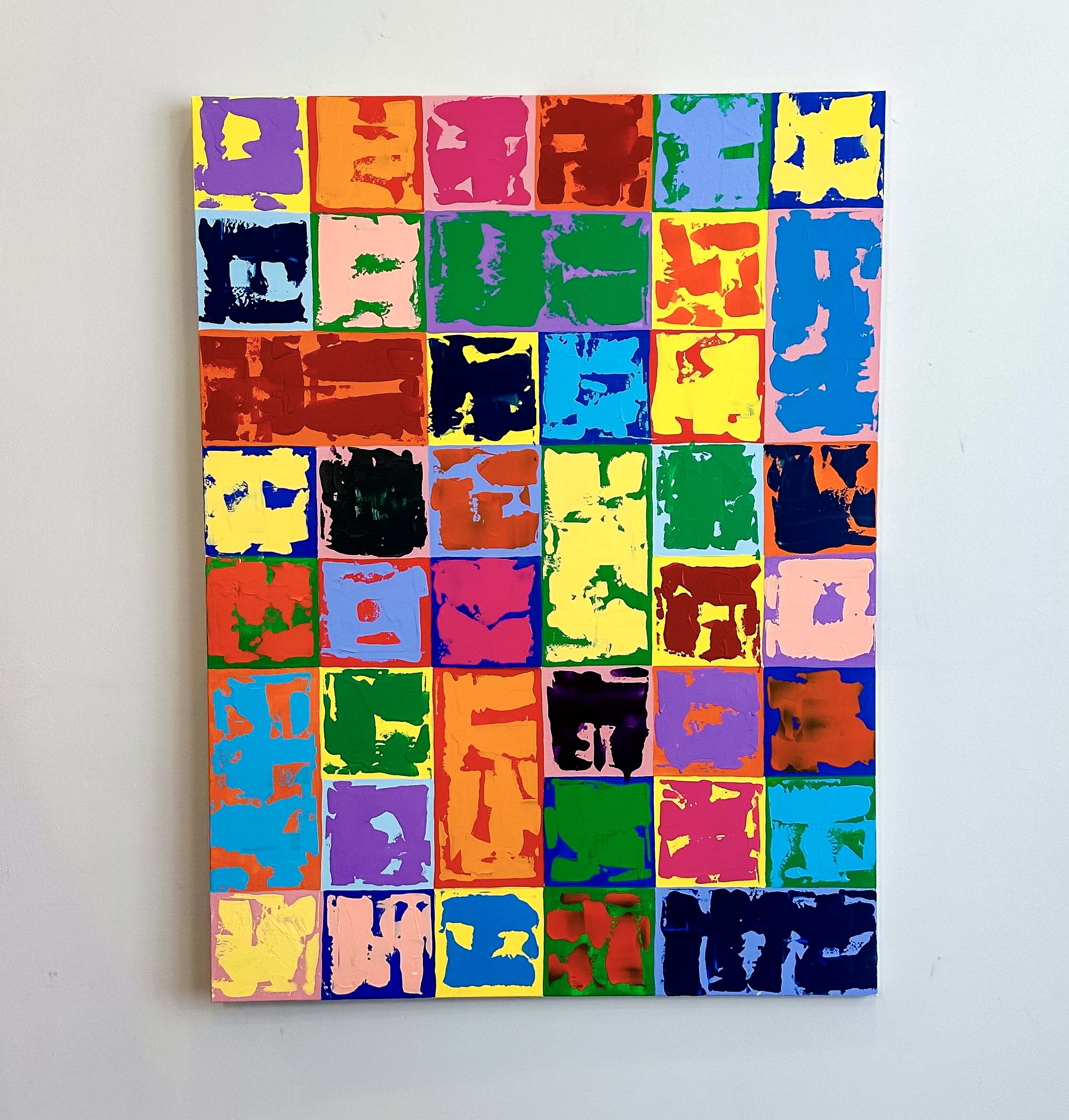
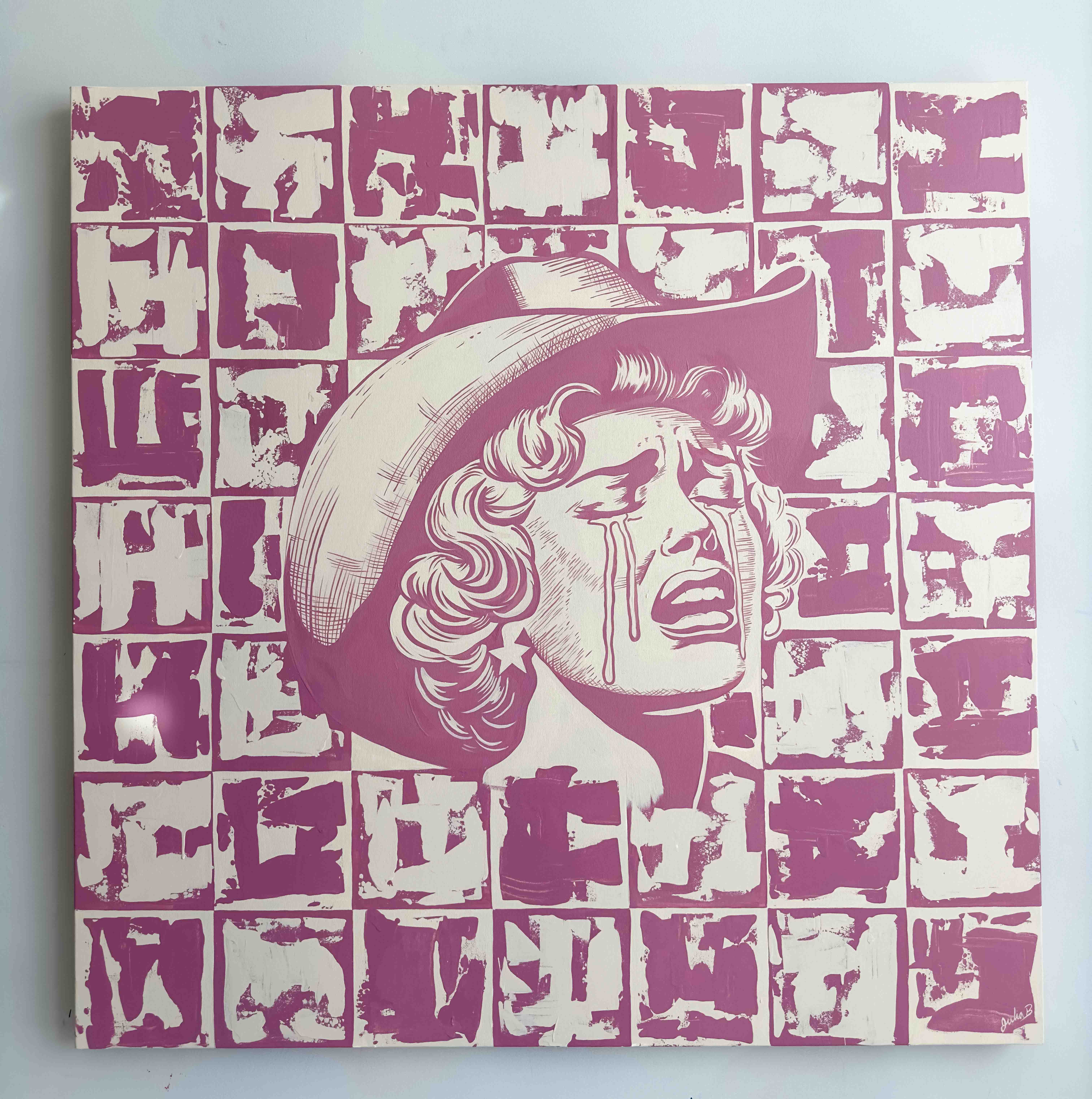
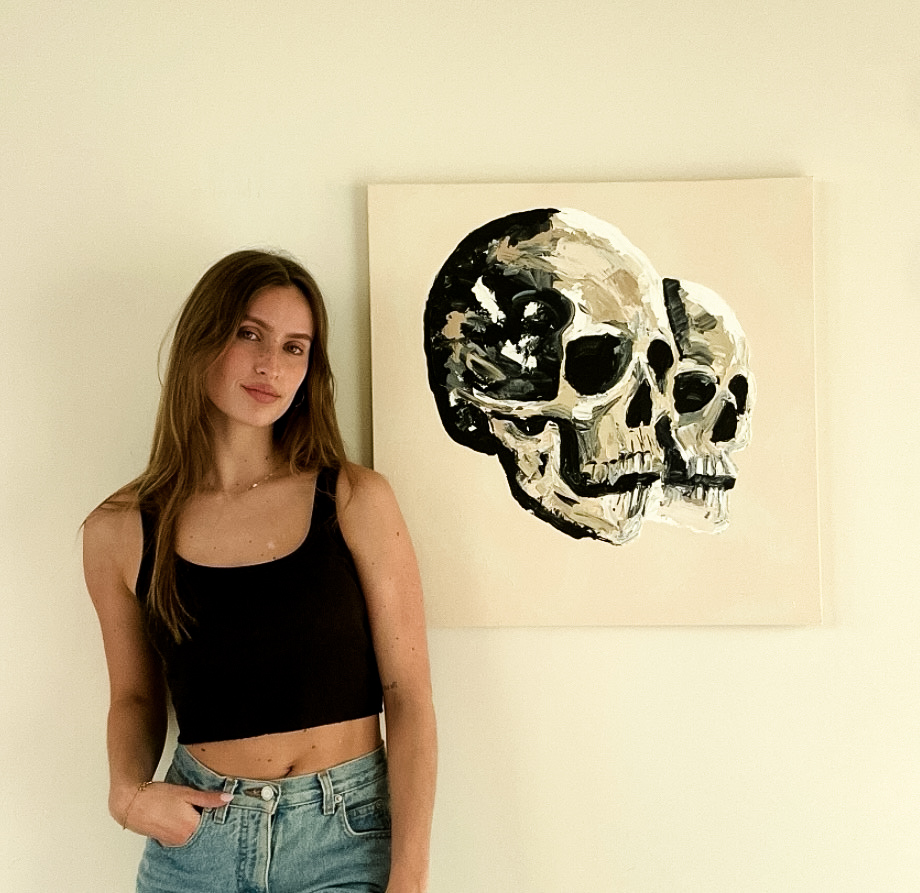
Color plays a huge role in evoking emotion, but my choices are usually based on what best complements the subject. When I paint skulls, I tend to use bold primary colors. For my abstract square pieces, I work with a wide range of palettes and carefully select color combinations that harmonize with one another.
What role does nostalgia play in your vintage car collection?
It’s all about capturing the feeling of the past. Nowadays, with so many electric cars on the road, we’ve lost that unique, classic feel. I’m very nostalgic by nature, and I love the aesthetic and vibe of the ‘80s — cruising around in vintage cars, listening to old-school music. That sentiment really drives the series.
How do you approach creating custom commission pieces tailored to a client’s vision?
I always start by asking for a reference photo or a detailed breakdown of what they’re looking for. Sometimes I’ve had to turn down commissions if the request was outside my skill set, like a landscape painting. Once I understand the vision, I ask about canvas size, color preferences, and anything they want to avoid. Throughout the process, I keep the client updated to make sure the piece aligns with their expectations.
What has been your most memorable commission project to date?
I recently completed five pieces for a restaurant opening in Toronto. It was my biggest and most challenging project to date. It really pushed me out of my comfort zone, but finishing those pieces and seeing how well they turned out was incredibly rewarding.
How do you balance personal expression with client expectations in commissioned works?
I’ve been lucky to work with amazing clients who usually commission me for the vintage car series, so they already have an idea of what to expect. One time, a client gave me full creative freedom to make anything — which was surprisingly stressful because I had no direction or sense of what they might be expecting. Thankfully, they loved the final piece, which made it all worthwhile.
Your art is featured in various galleries. How do you approach gallery exhibitions and what do they mean to you?
The galleries that represent my work have all approached me directly. I’ve had a few others reach out, but they wanted to charge a fee just to display the art, which I didn’t agree with. The galleries I work with now operate on a commission basis, which is more standard. It’s rewarding to have a third party represent your work — it takes a bit of pressure off doing everything yourself.
How has your presence on platforms like Instagram and TikTok influenced your artistic career?
Honestly, I don’t think I’d be a full-time artist without social media. Posting consistently on TikTok and Instagram has helped me grow a following, making it easier for people to discover my work and reach out about commissions. It’s like having a second job to keep up with content, but it’s played a huge role in my growth and success.
What advice would you give to aspiring artists looking to build an online presence?
Consistency is everything. I posted for a year without any real traction — it just took one random video to blow up and change everything.
How do you stay motivated and inspired during creative blocks or challenging times?
I try to push through them. If I hit a serious block, I’ll take a few days off to reset. It’s all about balance — giving yourself time to recharge while still creating space for inspiration to come back.
What has been the most rewarding aspect of your artistic journey so far?
Knowing that my art is hanging in people’s homes is such a beautiful feeling. I deal with imposter syndrome often — it’s surreal to think that people pay to own my work. But when they send me photos of themselves holding a painting or showing it displayed in their home, I can’t describe how much that means to me. I’m incredibly grateful.
Are there any new techniques or styles you’re interested in exploring?
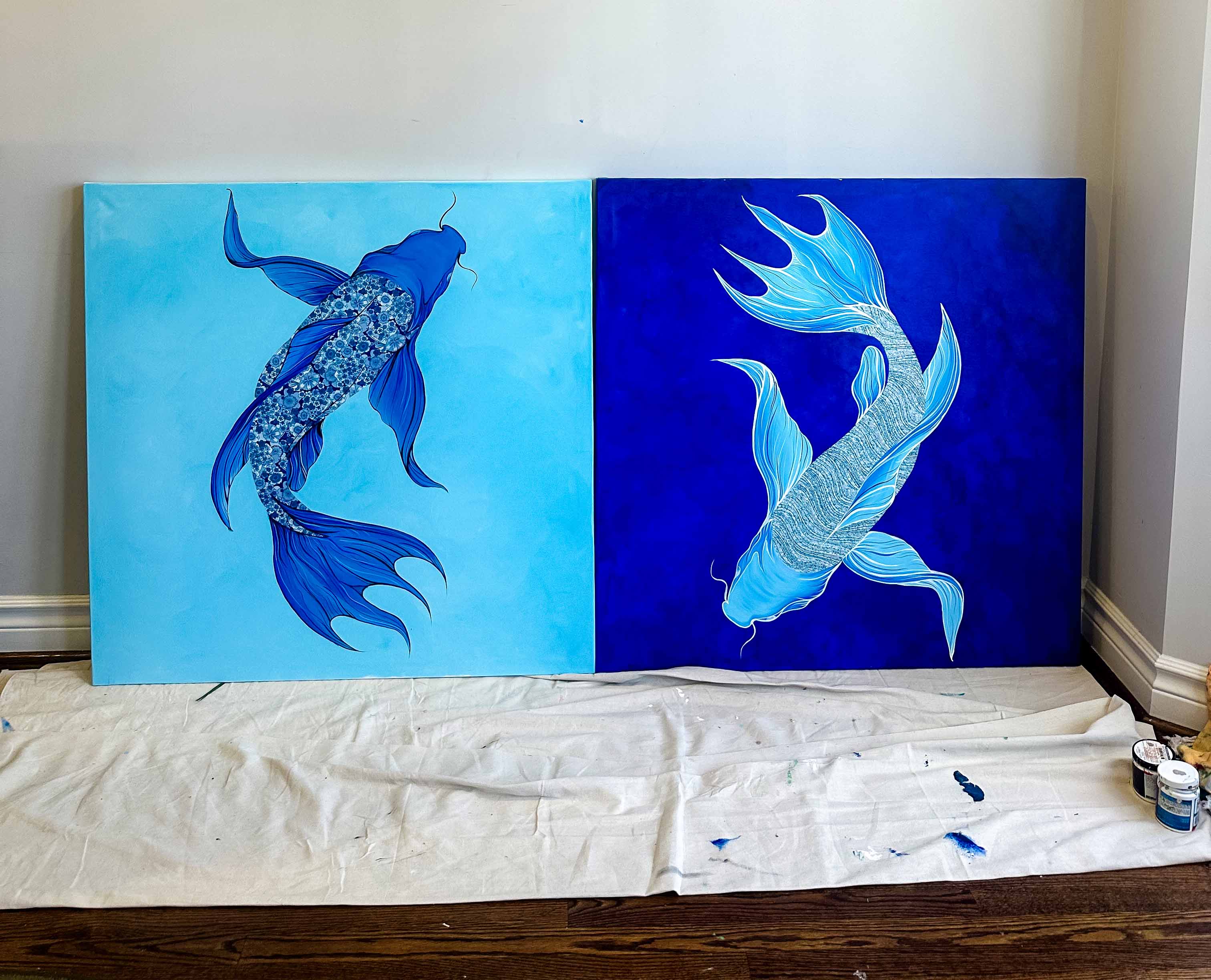
I’d love to experiment more with oil paint and mixed media. Recently, I started incorporating Mod Podge and Japanese paper into some pieces, and that’s been really exciting to explore.
Can you share a memorable interaction with a collector or fan of your work?
Some of the most meaningful interactions come from people online. I’ve built a loyal following, and there are people who consistently comment on and support every video I post. That ongoing encouragement means a lot to me.
What message or feeling do you hope viewers take away from your art?
I hope people realize that art can just be fun — it doesn’t always need to have a deep meaning. I sometimes get comments like, “This isn’t art, where’s the meaning?” and while I understand that perspective, I don’t believe every piece needs to be profound. I want people to enjoy the work for what it is, but I’m always open to hearing how others interpret it too.
Your message for us at CiiN magazine.
Thank you so much for taking an interest in me and my work! It’s been really fun reflecting on these questions — I truly appreciate the opportunity.