Shattering the Surface to Reveal New Perspectives
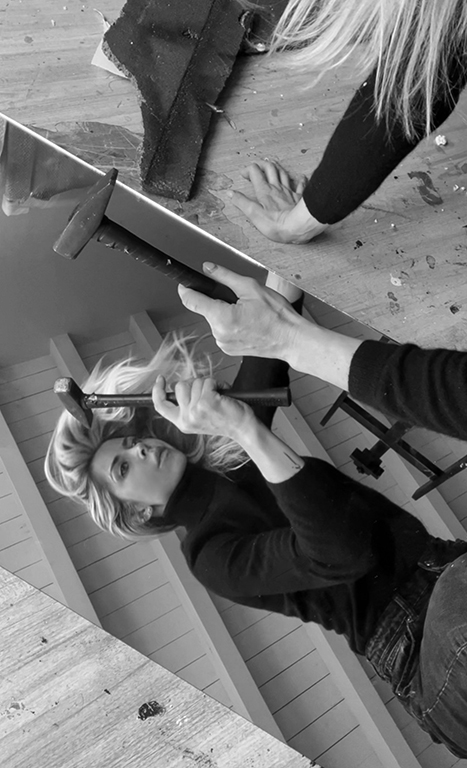
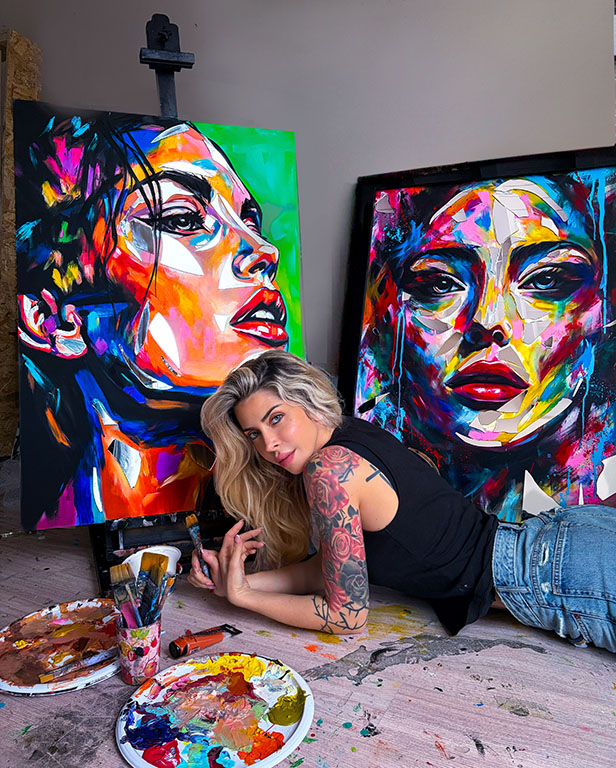
Italian visual artist Eleonora Crippa builds a compelling dialogue between fragmentation and transformation through her distinctive “Broken Mirror Art” practice. Born in Sirmione on Lake Garda, Crippa’s creative path is shaped by an unconventional journey that bridges fine art and classical ballet. Years spent in front of the mirror as a dancer pursuing discipline, precision, and the ideal of perfection, now inform a body of work that challenges and transcends those very notions.
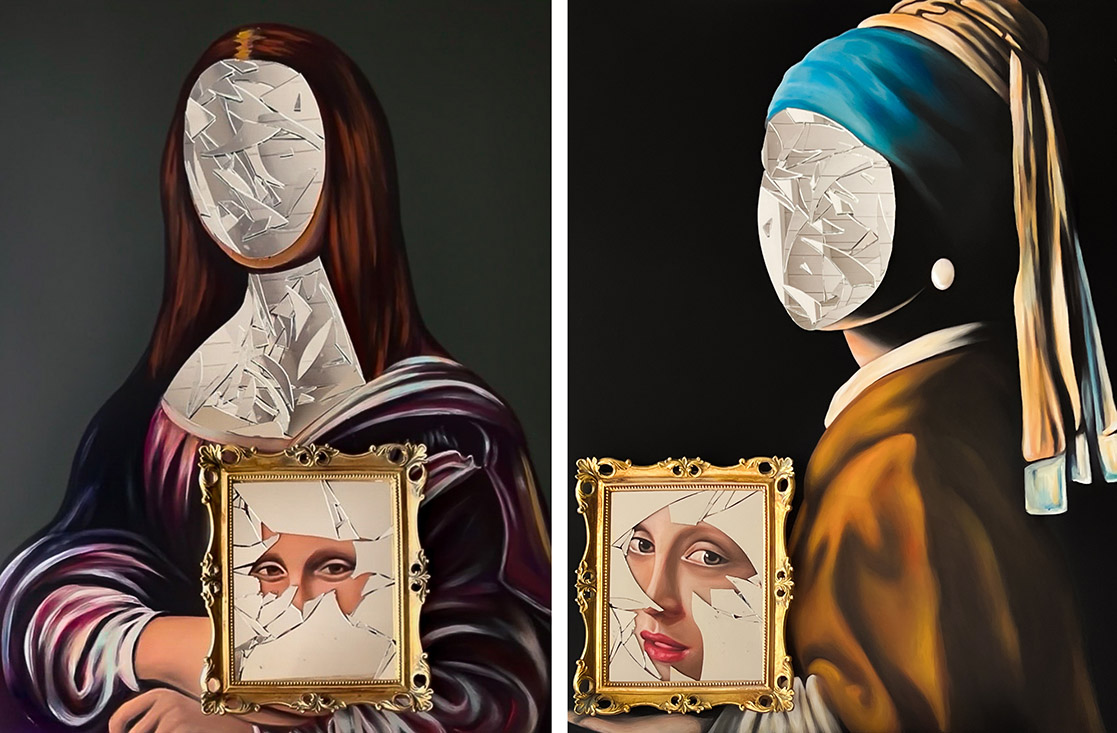
At the core of her practice is the mirror, not as a passive reflective surface but as an active medium. By breaking and reconstructing it, Crippa transforms a symbol of unity into a multiplicity of perspectives, inviting viewers to reconsider identity, perception, and change. Her work explores the poetic tension between rupture and renewal, suggesting that what appears fractured may, in fact, hold the potential for reinvention.
In this conversation, Crippa reflects on her artistic evolution, the influence of her personal experiences, and the philosophy that drives her exploration of material, gesture, and meaning.
Can you introduce yourself to our readers and tell us about your journey to becoming an artist?
I am a visual artist born in Sirmione, on Lake Garda. My path has been far from linear: I initially studied art, but I interrupted my studies to pursue a scholarship as a classical ballerina. For years, I lived in front of a mirror, in constant dialogue with my reflection, my body, and the idea of perfection. Only later did I return to art, bringing all of that experience with me. Today, my work originates from that experience: the mirror is not just an object, but a starting point for exploration and transcendence.
You are originally from Sirmione, how did your upbringing and environment influence your artistic sensibility?
Growing up in Sirmione, surrounded by the lake, taught me to observe reflections and surfaces. The lake is a natural mirror, never still, constantly changing. This instability deeply influenced me, leading me to see an image not as fixed, but as something in continuous transformation.
Can you tell us about your educational background and the experiences that shaped your practice?
My path intertwines art and dance. I began with art studies, but classical dance took over. Even though I paused my art education, what truly influenced my practice were personal experiences. Like everyone, I went through difficult moments, true inner ruptures. I learned that these cracks give us the strength to be reborn and to transform. I applied this concept to my art: in the broken mirror, I don’t see destroyed fragments, but possibilities for rebirth, new perspectives and transformations born from rupture itself.
Were there any mentors, artists, or movements that influenced your early development?
In reality, I never had specific references guiding my artistic expression. My path has always been instinctive, guided more by what I felt than by external influences. Dance was my first true guide, teaching me discipline and precision of movement, but in art, I have always followed an internal impulse. My language has developed autonomously over time through direct experience, material exploration, and the need to transform what I have lived.
Your work revolves around the concept of breaking and reconstructing, how did this idea emerge?
It arose from years spent in front of a perfect mirror. In dance, the image must be constantly corrected and made flawless. At a certain point, I felt the need to go beyond that perfection not to destroy it, but to transcend it. The act of breaking became a necessary gesture to open new possibilities, transforming perfection into something unique.
The use of mirrors and fragmentation is central to your “Broken Mirror Art” series, what draws you to these materials and symbols?
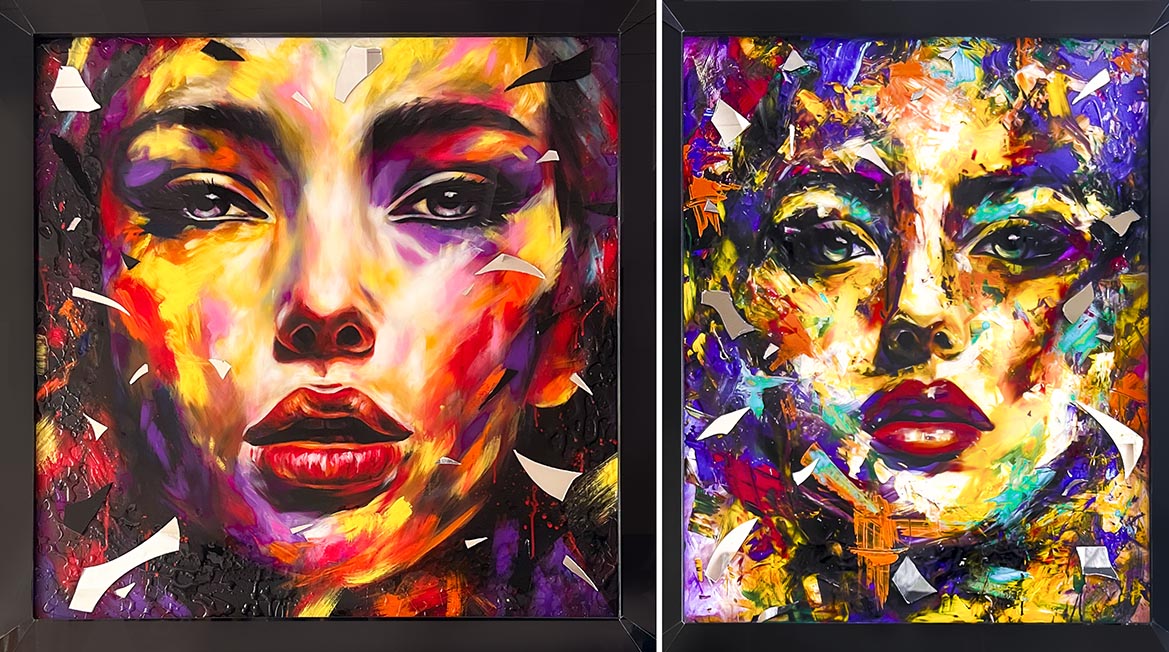
The mirror represents a single, defined image. When I break it, that image multiplies and loses control. It is not a destructive act, but a generative one: each fragment becomes a new perspective, a different way of seeing, creating, and being reborn.
I don’t break to destroy. I break to transform. It is in the fracture that a new possibility is born.
You have described your work as a metaphor for transformation and evolution, how does it reflect your personal experiences?
My work comes from real experiences, like those we all face when confronting daily challenges and difficult moments. Life presents us with fractures, inner ruptures, and complex situations, and my work reflects this: what is broken or seems destroyed is not always lost. On the contrary, every fracture can be seen as a possibility for rebirth, transformation, and a new perspective. This is the deeper meaning of my art: to show that breaking can open the way to something authentic and new and that even in pain and difficulty, creative strength emerges.
Can you walk us through your creative process, from the initial idea to the final piece?
The process begins with an internal impulse. The act of breaking is physical but also symbolic: I do not experience it as destruction, but as an opening. Then I observe the fragments, relate them to one another, and allow them to find a new balance. Reconstruction is slow and meditative: from the initial chaos, a new harmony emerges.
How important is experimentation in your practice, especially when working with unconventional materials?
It is fundamental. Every break is unique and unpredictable, and it is precisely within that unpredictability that new possibilities arise. Experimentation is at the heart of my work.
Destruction and creation coexist in your work, do you see them as opposites or as part of the same cycle?
I don’t speak of destruction. Breaking is a passage, a gesture that opens the way to something new. Creation and breaking are inseparable; they are part of the same flow.
How has your artistic style evolved over time?
At first, it was more instinctive. Today, it is more conscious, without losing its connection to gesture and the body. I know that every break is not an end, but a beginning.
In an age dominated by digital imagery, your work has a strong physical and tactile quality, how do you see the relationship between materiality and meaning?
Materiality is fundamental. The mirror, with its fragility and its ability to reflect and distort, carries meaning that digital imagery cannot convey. Gesture, the body, and the physicality of the work are central: contact with the broken mirror makes transformation, rupture, and the possibility of creating new perspectives tangible.
Do you consider your work more conceptual, emotional, or aesthetic?
It is a balance of all three. It originates from an emotional impulse, develops through a conceptual process, and manifests in an aesthetic form.
What challenges have you faced as a contemporary artist?
Redefining my identity after dance was a significant challenge. Transforming an interrupted path into a new form of expression required time and awareness.
How do you navigate the balance between personal expression and audience interpretation?
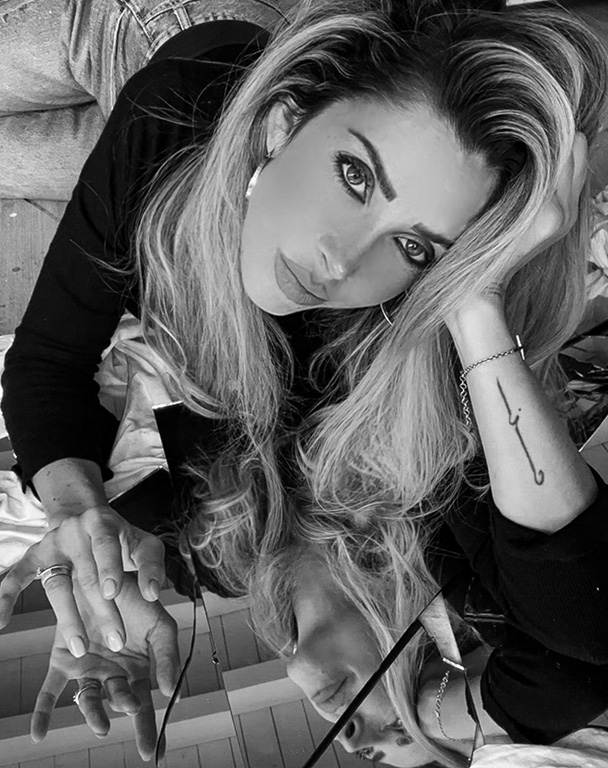
I leave space for interpretation, but I want the viewer to have the opportunity to immerse themselves in the distorted fragments of my work. In front of a broken mirror, each person can encounter something deeply introspective: they can observe, imagine, and see beyond the surface, creating their own personal reading of rupture and transformation.
Have previous exhibitions or projects influenced the direction of your work?
Every project has been a moment of transformation. Engaging with space and the public always opens new directions and possibilities.
What message or feeling do you hope viewers take away after experiencing your art?
That what breaks is not lost, it is the beginning of a transformation. I want people to see in my work not the fracture, but the possibility that arises from it.
How does your Italian heritage inform your artistic vision, if at all?
It influences me naturally. Growing up in Italy means developing a sensitivity to form, balance, and material. Even in fragments, I always seek harmony and this comes from my Italian cultural background.
Are there themes or mediums you haven’t explored yet but are eager to experiment with in the future?
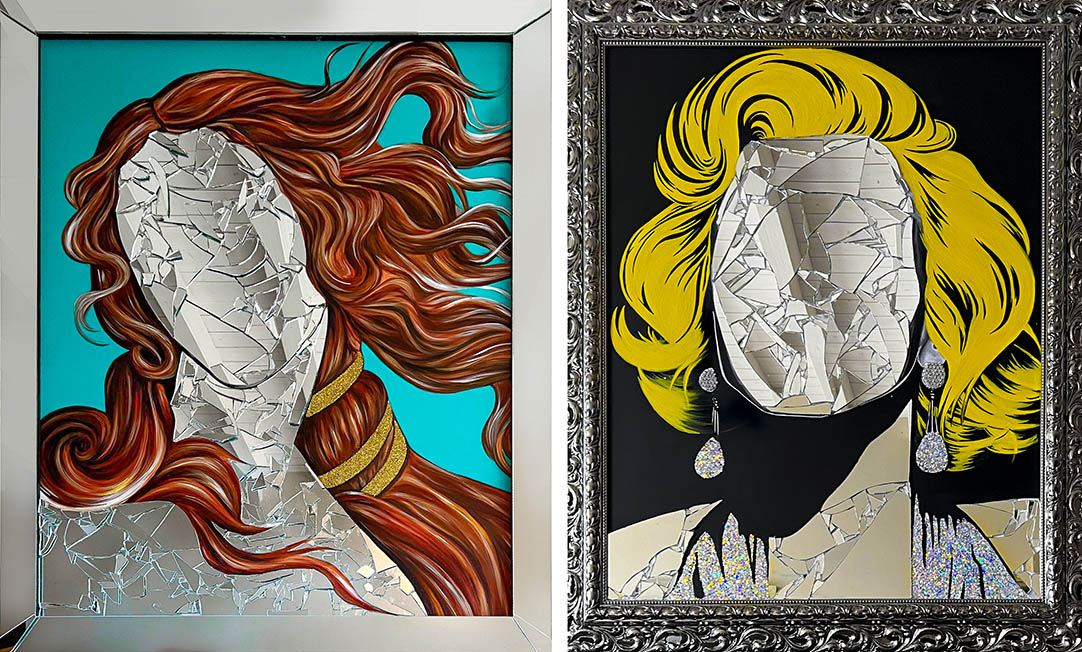
I would like to expand my work into sculpture and installation, creating pieces that allow viewers to physically interact with space and experience fragmentation and transformation in an immersive way.
What advice would you give to emerging artists who are still searching for their voice?
Accept your path, even when it changes direction. Don’t be afraid of breaks often they are what bring out your authenticity.
Your message for CiiN Magazine?
Thank you for giving space to authentic visions. Art needs platforms that value the process, not just the result.